

Remote neurofeedback is a brain training program you can do at home. An EEG device transmits your brain activity to an app that rewards relaxation and reduces stress patterns. In this testimonial, Marcel Gohl from Las Almas describes how 15 minutes of training in the morning led to less stress in the evening and better sleep. The program costs €675 per month, including weekly online sessions.
For a few years now, I've been exploring ways we can gently and sustainably guide our brains toward greater well-being with neurofeedback. I'm a tech nerd; I'm interested in everything related to new technology. When I met Alex Ni a few years ago and he introduced me to mobile neurofeedback technology, I couldn't stop reading, taking neurofeedback training courses, and trying it out myself. Remote neurofeedback has emerged as one of the most promising approaches—and since I tried it myself, I wouldn't want to be without it. Especially when it comes to stress and sleep disorders, it opens up a new dimension of self-efficacy.
What is remote neurofeedback?
Imagine training your brain much like a muscle – from the comfort of your own home! The Las Almas Group system provides feedback on your current brain activity as you complete specific sessions. Through audio or visual animations, your brain is "rewarded" whenever it exhibits desired patterns: for example, more relaxation (alpha waves) instead of stress (excessive beta activity). No one dictates how you should think – you learn intuitively and in a way that is completely personalized.
How did the training feel in everyday life?
After just a few weeks of remote neurofeedback, I felt a difference: The pressure in the evenings eased, and minor daytime annoyances no longer seemed like a molehill. What I liked best was that I fell asleep faster – and mostly slept through the night. Scientists confirm this effect: Studies show that neurofeedback brings significant improvements in stress reduction and sleep disorders. Particularly exciting: In a large study, 69% of people with elevated anxiety symptoms returned to normal after the training – and sleep quality also improved measurably.
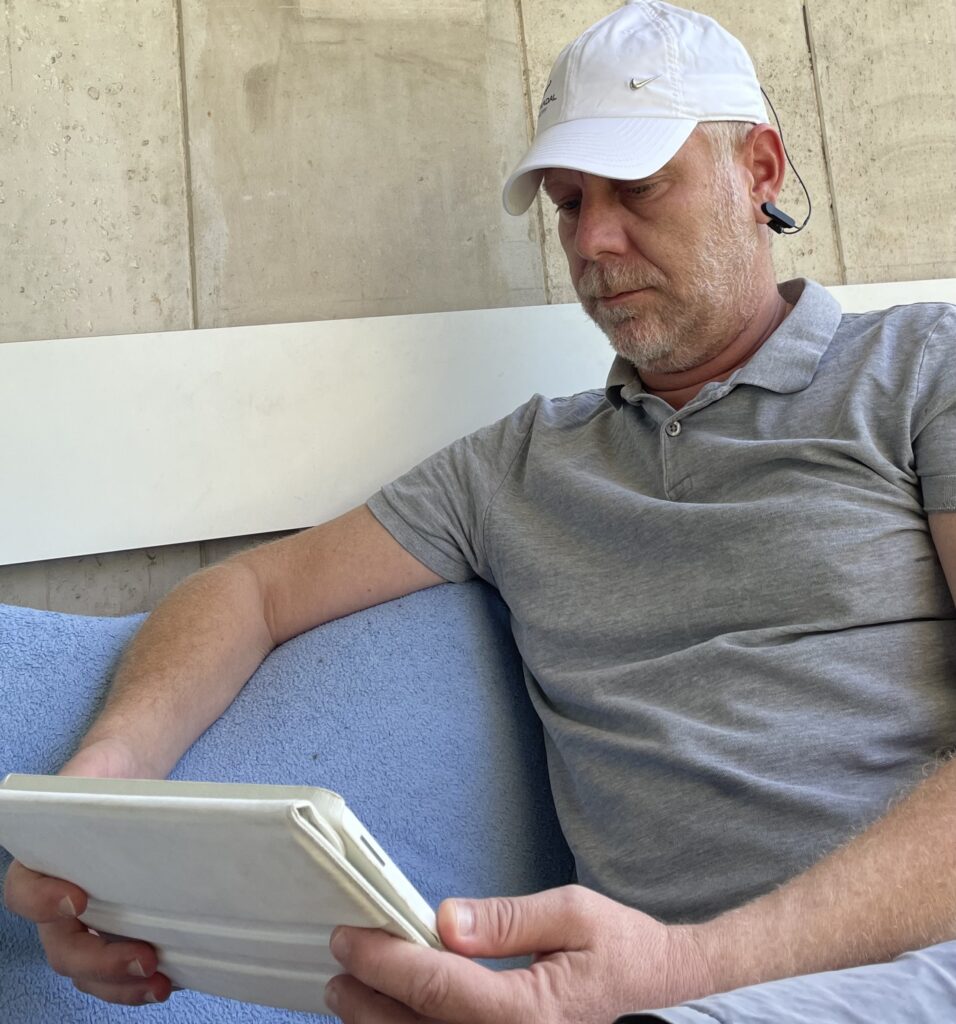
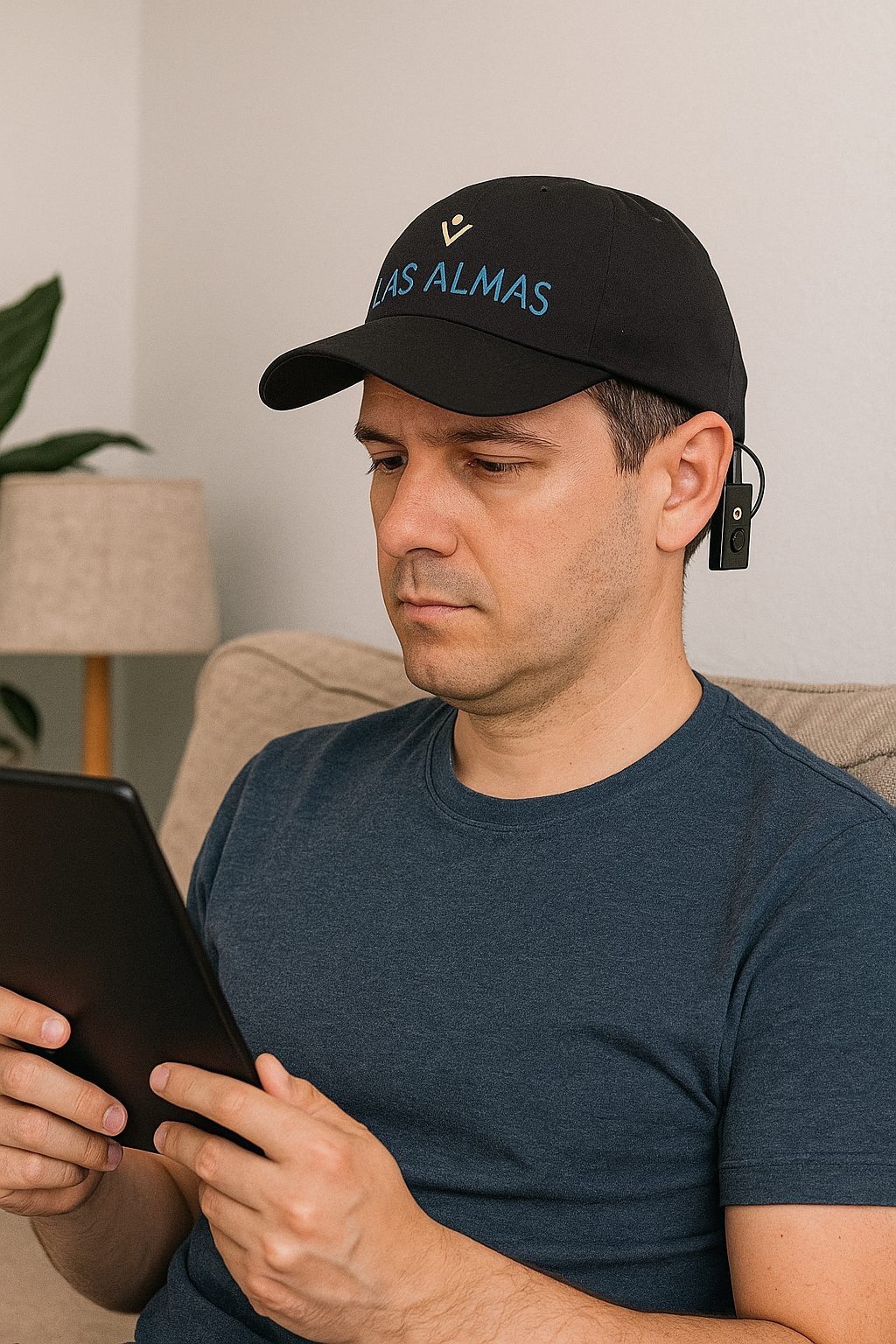
My morning session lasted 15 minutes. I did my exercises with the Las Almas UNO, which has an electrode that attaches magnetically under the cap. I then completed my morning audio-visual training on a tablet using the app.
What does the Las Almas program offer and how much does it cost?
- Transparent fixed price: For €675 a month, you get everything you need: between 30 and 60 sessions per month, plus a weekly online consultation with a specialist therapist. Of course, we're always here for you if you have any questions or need support. In traditional practices, the cost is usually twice as high for fewer sessions—and you often have to travel.
- Remote devices: The equipment prices range from €399 to €599. The machines feature the latest technology and can be used by the whole family. And you can also train other areas; you'll find plenty of information about that on our website.
- Flexibility in everyday life: You train whenever it suits you best—be it early in the morning, after work, or on the weekend. No waiting rooms, no appointments, no stress.
- Scientifically based: The Las Almas Group works according to a holistic approach. The mechanism of action is sound: Through targeted training, the brain areas responsible for relaxation and sleep are regulated, and according to studies, this effect persists even after the end of treatment.
- Individual support: The weekly supervision sessions are invaluable. Together with your therapist, you'll reflect on your results, receive tips for further development, and set new goals.
A quick look at the numbers
Provider | Price per month | Sessions/month | Supervision |
Las Almas Remote Neurofeedback | 675€ | 30-60 | weekly online |
Classical neurofeedback | 1,200€ – 1,800€ | approx. 8-12 (100€-150€ each) | mostly on-site, rarely remote |
Who is the program suitable for?
People with
- stressful phases of life
- Difficulty falling asleep or staying asleep
- recurring rumination loops
- Recovery deficits after burnout or exhaustion
For those who have already tried many things but are looking for a sustainable, self-determined method, I highly recommend this.
Is remote neurofeedback worthwhile?
For me personally, remote neurofeedback was a game-changer—it's profound, yet wonderfully easy to integrate into everyday life. Scientific studies and my own experience go hand in hand: less stress, more sleep, and a better quality of life. Anyone seeking support for lasting change should give this approach a serious try. And yes, I have to say, a remote system combined with a baseball cap does look a bit trendy.
Transparency: This report is based on personal experience and scientific sources from neurofeedback research (sources are listed below). As always, every person is different—but it's worth a try!
Best regards,
Marcel Gohl
Sources
- https://pmc.ncbi.nlm.nih.gov/articles/PMC8546766/
- https://europepmc.org/article/med/34733650
- https://pubmed.ncbi.nlm.nih.gov/34733650/
- https://www.frontiersin.org/journals/neuroscience/articles/10.3389/fnins.2024.1450163/full
- https://pubmed.ncbi.nlm.nih.gov/39568666/
- https://doaj.org/article/e8d2e4a9768641249f244bbdce80f155
- https://academic.oup.com/brain/article/140/4/1041/3039235
- https://papers.ssrn.com/sol3/papers.cfm?abstract_id=4490651
- https://www.redalyc.org/journal/1339/133963198002/133963198002.pdf
- https://rehmed.pl/article/01.3001.0016.0627/en
- https://brieflands.com/articles/ijpbs-140330
- https://jkms.org/pdf/10.3346/jkms.2024.39.e94
- https://pubmed.ncbi.nlm.nih.gov/38469966/
- https://www.radboudumc.nl/en/news/2021/increasing-stress-resilience-through-neurofeedback-training
- https://pmc.ncbi.nlm.nih.gov/articles/PMC10843594/
- https://pubmed.ncbi.nlm.nih.gov/37788060/
https://www.frontiersin.org/journals/psychiatry/articles/10.3389/fpsyt.2024.1323485/full
Frequently Asked Questions
What is remote neurofeedback?
Brain training from home, similar to muscle training. The system provides feedback on current brain activity. Through audio or visual animations, the brain is rewarded when it exhibits desired patterns, for example, more relaxation instead of stress.
How much does the program cost?
675 euros per month for 30 to 60 sessions and a weekly online consultation with a specialist therapist. The devices cost between 399 and 599 euros and can be used by the whole family.
How long does a session last?
The report states that the morning session lasted 15 minutes and included Las Almas UNO and audiovisual training via the app on a tablet. Training takes place whenever it suits participants, without waiting rooms or appointments.