


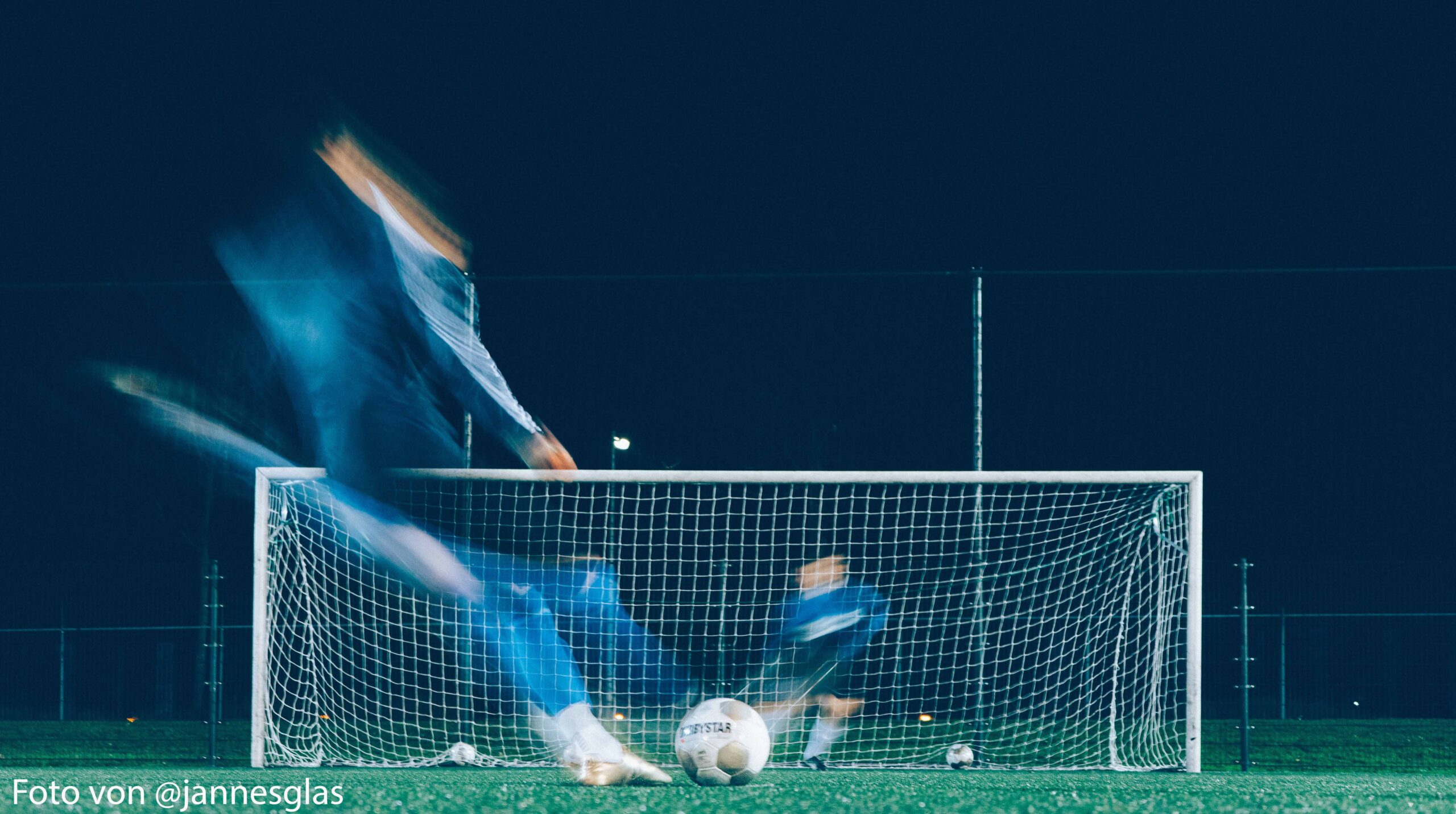
Remote neurofeedback is a mental training method for football players that takes place at home or at the club. A portable EEG device displays brain activity, and specialists from Las Almas analyze the data remotely. Author Marcel Alexander Gohl describes why clubs like Liverpool FC use neurofeedback, what the training costs, and what benefits he sees for concentration, stress reduction, and recovery.
Why do professional sports clubs use neurofeedback?
As someone who has been following the development of modern training methods in football for years, I'm always fascinated by how technology is revolutionizing the sport. But what I've learned about remote neurofeedback in recent years has truly excited me and led me to become more and more interested in the topic.
The moment I realized: This is a game changer
Imagine this: Mo Salah sits down to take a crucial penalty, thousands of fans are screaming, the pressure is immense. But he's calm, focused, in his own bubble. This is no coincidence – Liverpool FC already uses neurofeedback technology to mentally optimize their players. And the result? A perfect penalty in the 2022 Carabao Cup Final.
This story shows me that we are no longer just talking about the future – we are in the middle of it.
What do the studies show?
I'm skeptical of new trends, but the science behind remote neurofeedback is impressive. Over 25 studies prove its effectiveness, and the results speak for themselves:
- 30% Improvement of peripheral visual attention after just one session
- 34% increase Alpha activity among elite players
- 25% faster Reaction times under pressure
These numbers aren't just statistics—they mean the difference between a missed pass and a goal, between nervousness and confidence.
Why are players training from home instead of in the clinic?
What particularly convinces me is the remote approach. Think about the reality of a professional footballer: constant travel, tight schedules, training morning and evening. Who has the time to regularly go to a clinic?
With remote neurofeedback, players can:
- At home or in a club train
- Daily Conducting sessions
- Flexible times to use
- Up to 30% of the costs save
A player can add another 15-30 minutes after training and train his mental fitness just as much as his physical one. This is practical and sustainable.
How much does remote neurofeedback cost for players and clubs?
This is where things get really interesting: Clinical neurofeedback costs around €150-200 per session. For 30 sessions, that's €4,500-6,000—just for one player!
Remote neurofeedback? €700 per month per player, including software and professional support. Only the hardware needs to be purchased separately; prices range from €380 to €800, depending on the model. The advantage? One device can be used for multiple players. This is not only cheaper but also more efficient. A club can train several players simultaneously.
The ROI that makes club bosses sit up and take notice
At this point, even the number people start to take notice: 400% ROIThis means that the investment not only pays for itself, but also delivers real returns. How?
- Fewer injuries through better body control and attention
- Higher player ratings through improved performance
- Better league positions through more consistent performance
- Attractiveness for top talentwho value modern care
Which areas does neurofeedback train?
Neurofeedback isn't just another gadget. It addresses several aspects simultaneously:
Cognitive: Better concentration, faster decisions, mental endurance over 90 minutes
Emotionally: Stress reduction, less anxiety, better recovery from mistakes
Physically: Improved sleep quality, better coordination, injury prevention
This is not a superficial trend – it is a comprehensive optimization of mental fitness.
The technology behind it
What I particularly like is that the technology is sophisticated but not overly complicated. The Synchroni devices are wearable, and the DivergenceNeuro software is cloud-based and allows for remote monitoring by clinicians.
A player can train while experts analyze the data and make adjustments in the background. This is both professional and user-friendly.
Why I believe this is just the beginning
For me, remote neurofeedback is more than just a training method—it's a paradigm shift. We're moving away from a pure focus on physical fitness toward holistic optimization.
The clubs, as well as the footballers, who recognize and implement this early on will have a decisive advantage. It's not just about better performance today, but about preparing for the football of tomorrow.
And the best part? The technology is already here, scientifically proven, and successfully used by elite clubs. We just need to use it.
My conclusion
Remote neurofeedback isn't science fiction—it's the reality of modern football. The combination of scientific evidence, practical feasibility, and commercial efficiency makes it one of the most exciting developments I've seen in recent times.
For players, it means optimal mental health and a longer career. For clubs, it means better results and greater efficiency. And for us fans? Hopefully, even more spectacular football.
The future of football isn't just happening on the pitch—it's also happening in our heads. And remote neurofeedback is the key to that.
Best regards,
Marcel Alexander Gohl
Frequently Asked Questions
How much does remote neurofeedback cost for a player?
Approximately €700 per month per player, including software and professional support. Hardware costs between €380 and €800, depending on the model, and can be used by multiple players. Clinical neurofeedback, by comparison, costs around €150 to €200 per session.
Where and when do players train?
At home or at the club, daily and at flexible times. A player can add 15 to 30 minutes after training and train their mental fitness just as much as their physical fitness.
What technology is used?
Portable Synchroni devices and the cloud-based DivergenceNeuro software enable remote monitoring by clinicians. While the player trains, experts analyze the data in the background and make adjustments.