

At Las Almas, psychedelic-assisted therapy infusions are always combined with psychotherapy. On the day of the infusion, you will receive a low dose of the active ingredient over 40 to 60 minutes under medical supervision. The psychotherapeutic integration session takes place on the following treatment day. A series of infusions comprises three to four sessions over two weeks. It is used in Vienna and Palma for treatment-resistant depression, anxiety disorders, PTSD, and addiction.
How was the antidepressant effect discovered and how does it work in the brain?
Since the 1960s, psychedelic-assisted therapy has been developed, approved, and used as an anesthetic. However, through its administration and further research, it became clear that psychedelic-assisted therapy not only has an anesthetic effect but also a rapid antidepressant effect, particularly in treatment-resistant depression. As early as 2000, a Yale University study highlighted that even a low dose of psychedelic-assisted therapy can alleviate depressive symptoms within a few hours. This is a significant difference compared to traditional antidepressants, which usually require several weeks to achieve the same effect. (Berman et al., 2000)
It has thus been scientifically proven that ketamine promotes neuronal plasticity in the brain by blocking NMDA receptors. This specifically interrupts certain excitation processes in the brain. During this interruption, a state of increased changeability can be created. It is precisely this reversible effect that makes it possible, in the course of psychotherapeutic integration therapy, to profoundly reshape processes during this phase of emotional openness.
Why is the infusion combined with psychotherapy?
From these and other findings, ketamine-assisted psychotherapy (KAP) emerged, a combination of ketamine infusion and targeted psychotherapeutic integration therapy.
Especially in cases of therapy-resistant depression Rapid improvements can be achieved. Recent studies show that particularly lasting effects can be achieved by combining ketamine with integrative psychotherapy.
The slight decoupling of self-perception creates an emotional distance that allows access to previously inaccessible areas. A mildly hallucinatory state can thus lead to a temporary release from entrenched structures, making it easier to break negative spirals and allowing for more flexibility due to the newly formed neural connections.
For which diseases is the infusion used?
Treatment-resistant depression (TRD)
Randomized controlled trials and meta-analyses demonstrate the antidepressant effect of psychedelic-assisted therapy infusions, particularly in patients who respond poorly or not at all to conventional antidepressants. In many cases, a significant reduction in symptoms occurs after just a few sessions. Because the effect is so rapid, psychedelic-assisted therapy infusions are also used in suicidal patients to gain valuable time for further therapeutic interventions.
Suicidal thoughts
Meta-analyses have shown that a single ketamine infusion can significantly reduce acute suicidal ideation within a few hours. This effect can last up to three days. This provides valuable time for initiating further therapeutic measures to stabilize patients in acute distress.
Anxiety disorders and PTSD
Patients with anxiety disorders and PTSD also often respond well to ketamine. Studies document a significant and often rapid reduction in anxiety symptoms after a ketamine infusion. The effect can last for weeks or even months. Especially in chronic PTSD, repeated administration (4-6 infusions within 2 weeks) led to a significant improvement in general health and symptom severity compared to the placebo group.
Seeks
The administration of ketamine interrupts ingrained addictive memory pathways and promotes neuroplasticity. This facilitates the relearning of learned and entrenched behavioral and habitual patterns. Dissociative effects trigger and reinforce emotional distancing from habitual addictive behavior. Cravings and relapse spirals are thus significantly reduced.
Psychedelisch-assistierte Therapiee differs from traditional withdrawal medications in that it doesn't directly inhibit addiction, but rather opens a window of opportunity in which the newly forming neuronal connections can be targeted therapeutically. Psychedelisch-assistierte Therapiee can therefore be viewed more as a therapeutic catalyst.
Psychedelic-assisted therapy infusions are particularly effective when emotional trauma plays a role in the development of addiction.
Initial studies also show a significant reduction in the urge to smoke in cases of nicotine addiction.
Psychedelic-assisted therapy infusions are therefore particularly promising for alcohol and opiate-related addictions, but also for other dependencies. Craving and relapse rates can be significantly reduced when psychedelic-assisted therapy infusions are accompanied by therapy.
How does the treatment at Las Almas work?
Before starting ketamine treatment, you will have a detailed preliminary consultation with our physician to clarify your medical history. Possible exclusion criteria will be clarified, and a detailed discussion will take place regarding the procedure, effects, and side effects.
Psychedelic-assisted therapy is an integral part of our Hybrid Intensive Therapy program and is combined with numerous other therapeutic elements. Our experienced team will inform you about the therapy process and the various options available, and familiarize you with our therapy.
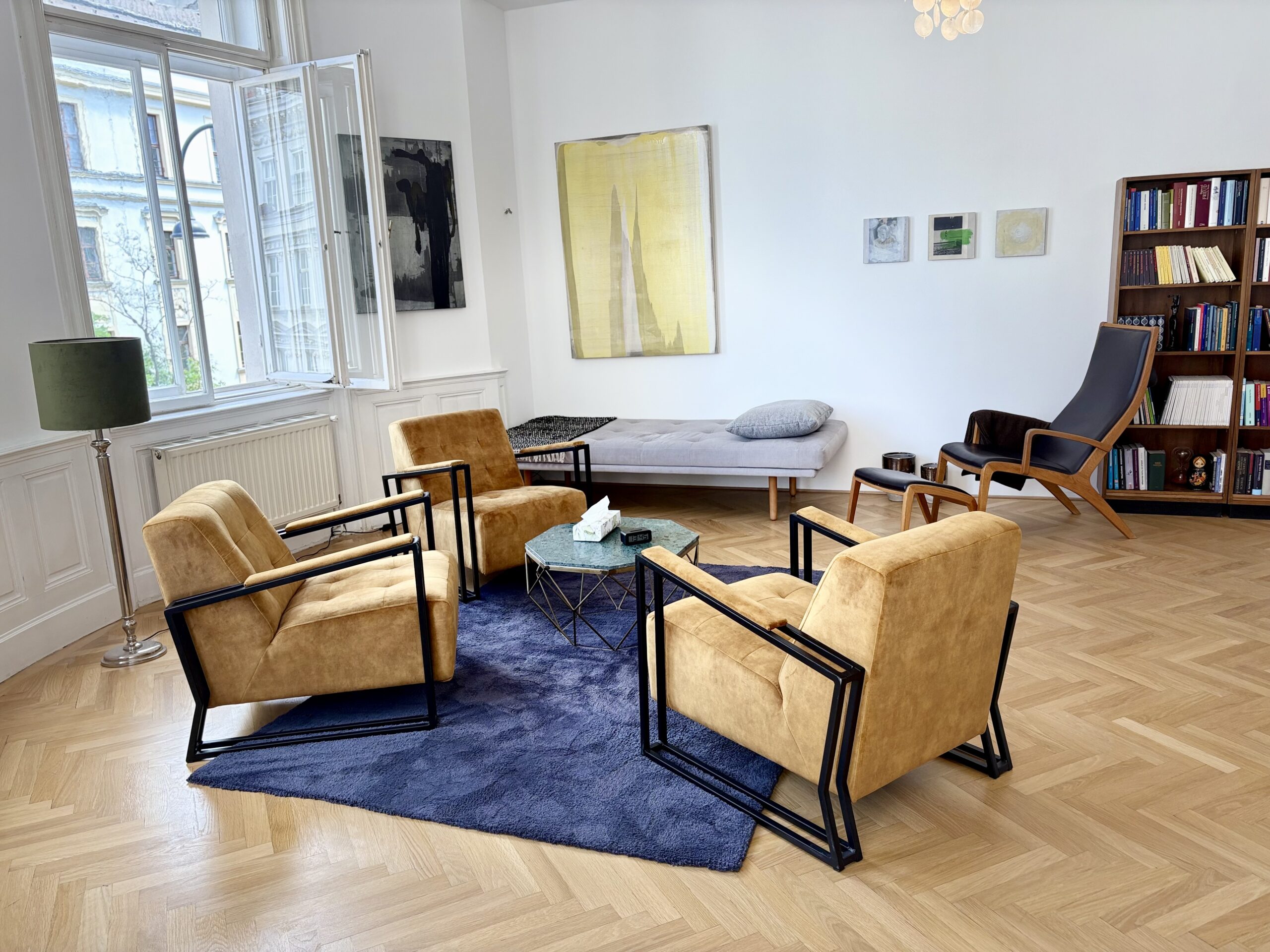
On the day of your infusion, you will receive a low dose of psychedelic-assisted therapy over 40-60 minutes, while you are monitored and supported by our Las Almas therapists in a relaxed environment. Mild dissociative states and altered perception often occur after about 10-15 minutes. This is followed by a rest period of approximately 30-60 minutes.
A treatment series at Las Almas lasts two to four weeks, with three to four infusions during each two-week treatment. Our psychotherapeutic integration therapy takes place with the treating psychotherapist on the following day of treatment.
Possible mild, temporary side effects such as dizziness, nausea, or headaches are constantly monitored. The entire procedure is conducted under medical supervision.
Does the infusion replace psychotherapy?
For many sufferers for whom conventional therapies have failed to produce the desired effect and who often already have a long history of suffering behind them, ketamine infusion therapy combined with integrative psychotherapy offers a scientifically supported, modern, and effective treatment alternative. Based on the encouraging studies available, this opens up a new, innovative treatment method.
However, ketamine alone will never replace comprehensive psychotherapy. However, it can be used as an integral component of holistic treatment and offers hope for a better quality of life and joy in life.
Please also read our “Studies” page. There you will find studies and publications on our individual procedures: https://www.lasalmasgroup.com/studien/
Best regards,
Mag. Sandra Gebistorf
LAS ALMAS
MENTAL HEALTH, HOLISTIC PERSPECTIVE
Frequently Asked Questions
What happens on the day of the infusion?
The active ingredient is administered in a low dose over 40 to 60 minutes while you are monitored and supported by therapists in a relaxed environment. Mild dissociative states and altered perception often occur after about 10 to 15 minutes. This is followed by a rest period of approximately 30 to 60 minutes. The entire procedure is conducted under medical supervision.
What side effects can occur?
Possible mild, temporary side effects such as dizziness, nausea, or headaches are continuously monitored during treatment. A detailed medical consultation clarifies the patient's medical history and any potential exclusion criteria before the start of treatment.
Does the infusion replace psychotherapy?
No. The infusion alone never replaces comprehensive psychotherapy. It is used as an integral part of a holistic treatment. The psychotherapeutic integration session takes place on the following treatment day.